How to Win Hackathons Like Crazyyy: The 7x National Champion Playbook
Winning 7 national offline hackathons isn't luck—it's an engineering and psychological formula. Here is the exact blueprint on team composition, beating generic AI ideas, killer UI polish, and creating unforgettable moments.
Winning 7 national offline hackathons across India—from 36-hour grueling marathons to high-pressure AI sprints—taught me one fundamental truth: hackathons are rarely won by pure lines of code alone.
They are won at the exact intersection of ruthless technical execution, magnetic storytelling, pixel-perfect design, and team chemistry.
If you want to stop participating just for free pizza and start winning trophies, cash prizes, and national titles consistently, here is the battle-tested playbook we use every single time.
1. The Holy Trinity Team Formula (2–3 Members Max)
Large teams of 4–5 people almost always suffer from coordination overhead, conflicting visions, and messy Git merge conflicts at 3 AM. A tight, agile unit of 2 to 3 members is the absolute sweet spot:
✓The Technical Beast: Owns the backend, system pipeline, and low-level code. Can answer any grilling technical question from judges—whether it's about database indexing, token limits, WebSockets, or algorithmic complexity—with calm, undisputed authority.
✓The God of Pitching: Makes the judges go crazy with the presentation. Doesn't read boring bullet points off slides. Instead, starts with a gripping emotional hook, controls the stage room with confident pacing, and delivers the demo with infectious energy.
✓The Numbers & Product Strategist: Plays with the metrics: addressable market, unit economics, latency figures, and business viability. When a judge asks "How do you monetize this?" or "What's your p99 response time?", this person drops concrete numbers immediately.
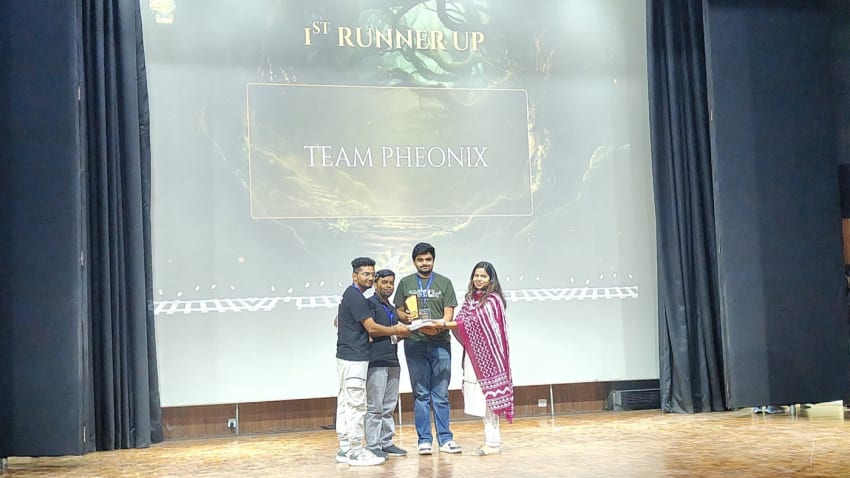
📸1st Runner Up Ceremony at Ace Hack 5.0 (36-Hour Offline Hackathon)Verified Proof
2. Beyond Generic AI: Going 10 Steps Ahead
Today, every single team in the hackathon hall has access to ChatGPT and Claude. If your idea is just "ChatGPT wrapped in a dashboard" or another generic document summarizer, you have already lost.
The judges have seen 20 chatbot clones by noon. To win, you must be multiple steps ahead:
✓Multimodal & Voice Integration: Add real-time speech input and low-latency voice synthesis via Web Audio API. When a judge speaks and the app immediately talks back with context, the entire room lights up.
✓Multi-Language Localization: Support localized native languages. A rural agricultural tool or financial app that switches seamlessly to Hindi, Spanish, or Japanese instantly proves real-world empathy.
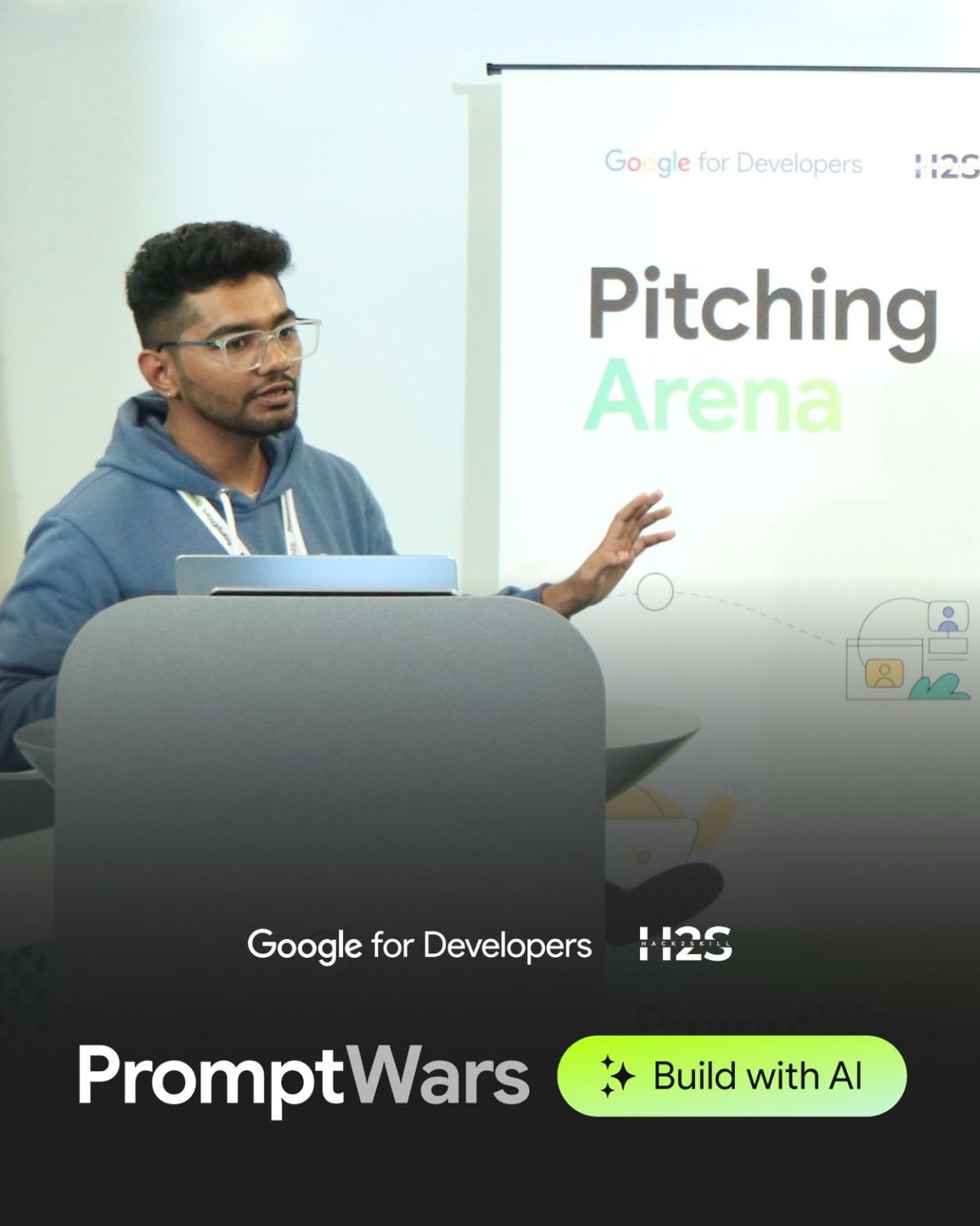
✓Dynamic Physics & Interactive Canvas: For Snow Bros 2D at Google Prompt Wars, we didn't build a chatbot; we revived an arcade game where Gemini dynamically generated enemy decision trees in 60 FPS Canvas combat!
📸1st Runner Up at Google Prompt Wars building Snow Bros AI in 24 HoursVerified Proof
3. Polish Your UI Like Apple Built It
The first 10 seconds of a judge's interaction are purely visual. If your application looks like a raw Bootstrap template from 2014, the judges subconsciously assume the underlying code is equally unrefined.
✓Design for Delight: Use dark mode glassmorphism, micro-animations, tasteful accent colors, and crisp typographic hierarchy.
✓Zero CLS & Instant Feedback: Ensure buttons give instant tactile feedback, loaders pulse cleanly, and animations are buttery smooth.
✓Responsive & Accessible: Make sure it runs flawlessly on both laptop screens and mobile viewports when the judge grabs your phone to test it.
4. Know What's Inside Your App (Never Fake Your Tech)
Judges are experienced staff engineers, CTOs, and tech founders. They can spot surface-level buzzwords from a mile away.
You must know your stack inside out:
✓Which specific LLM or model did you deploy? (e.g., Gemini 1.5 Flash vs Pro, Claude 3.5 Sonnet, or a fine-tuned LLaMA-3 checkpoint).
✓How many parameters was it trained on?
✓What is your token budget, latency benchmark, and error fallback when an external API times out?
✓Why did you choose WebSockets over polling, or PostgreSQL over MongoDB?
When you explain your architectural trade-offs with precision, judges immediately know they are looking at real engineers, not script kiddies.
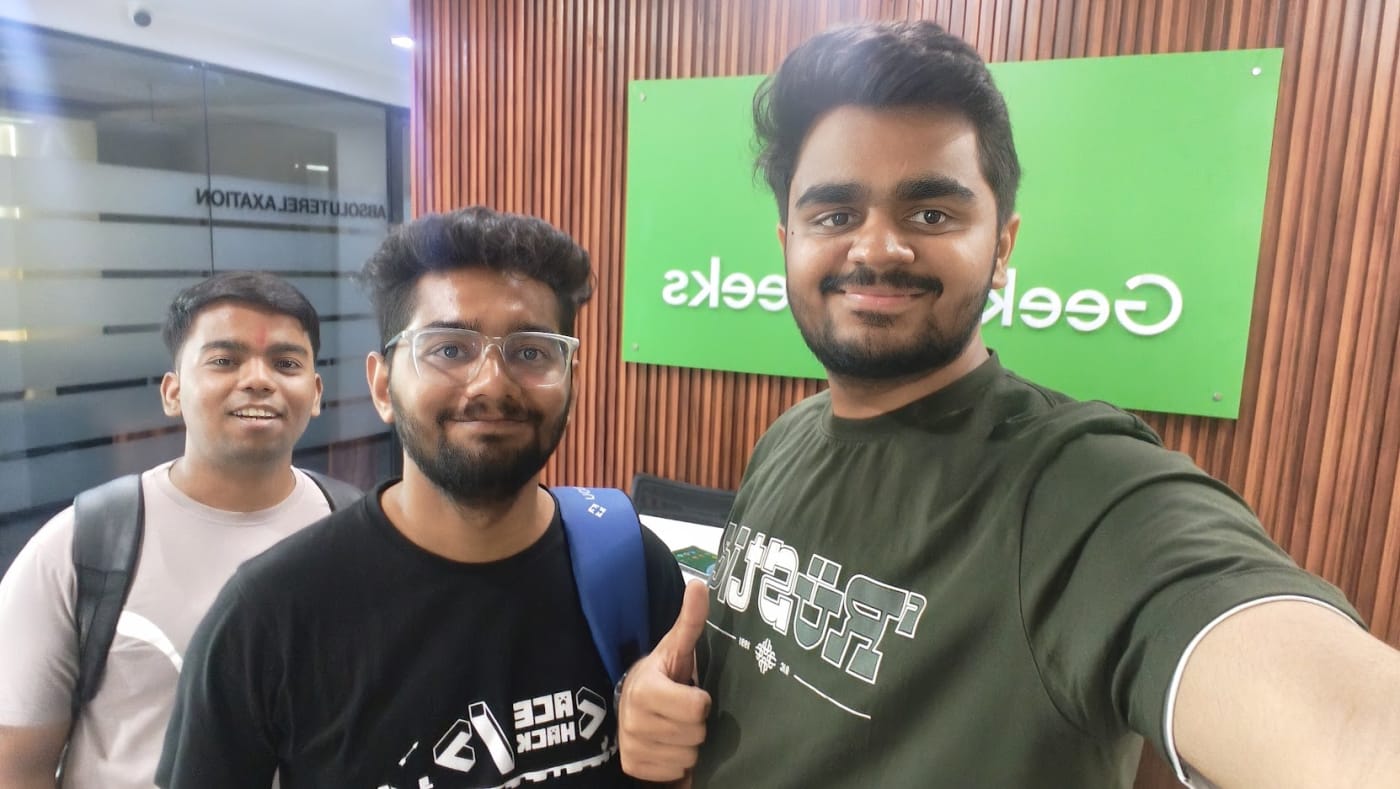
📸Stage Presentation & Trophy Moments at Kill SwitchVerified Proof
5. Know Your Game, Have Fun & Build Lifelong Connections
Hackathons are intense sprints, but if you treat them purely as high-stress contests, you miss the biggest prize of all: the people.
✓Enjoy the Crucible: Laugh at the 4 AM caffeine highs, debug crazy edge cases together, and cherish the chaos of building something from scratch in 24 hours.
✓Make Real Connections: Talk to fellow teams, exchange socials with mentors, and chat with judges after the rounds. The people you meet in hackathon pits become co-founders, collaborators, and lifelong friends who open doors for you years down the road.
Winning is incredible, but the memories, the resilience, and the network you build along the way are what truly stay with you forever.
Technologies & Concepts Covered:
HackathonsProduct StrategyPitchingUI/UXFull-Stack
Written by Prince Pal
Full Stack & Backend Engineer · 7x Hackathon Winner · Open source mentor